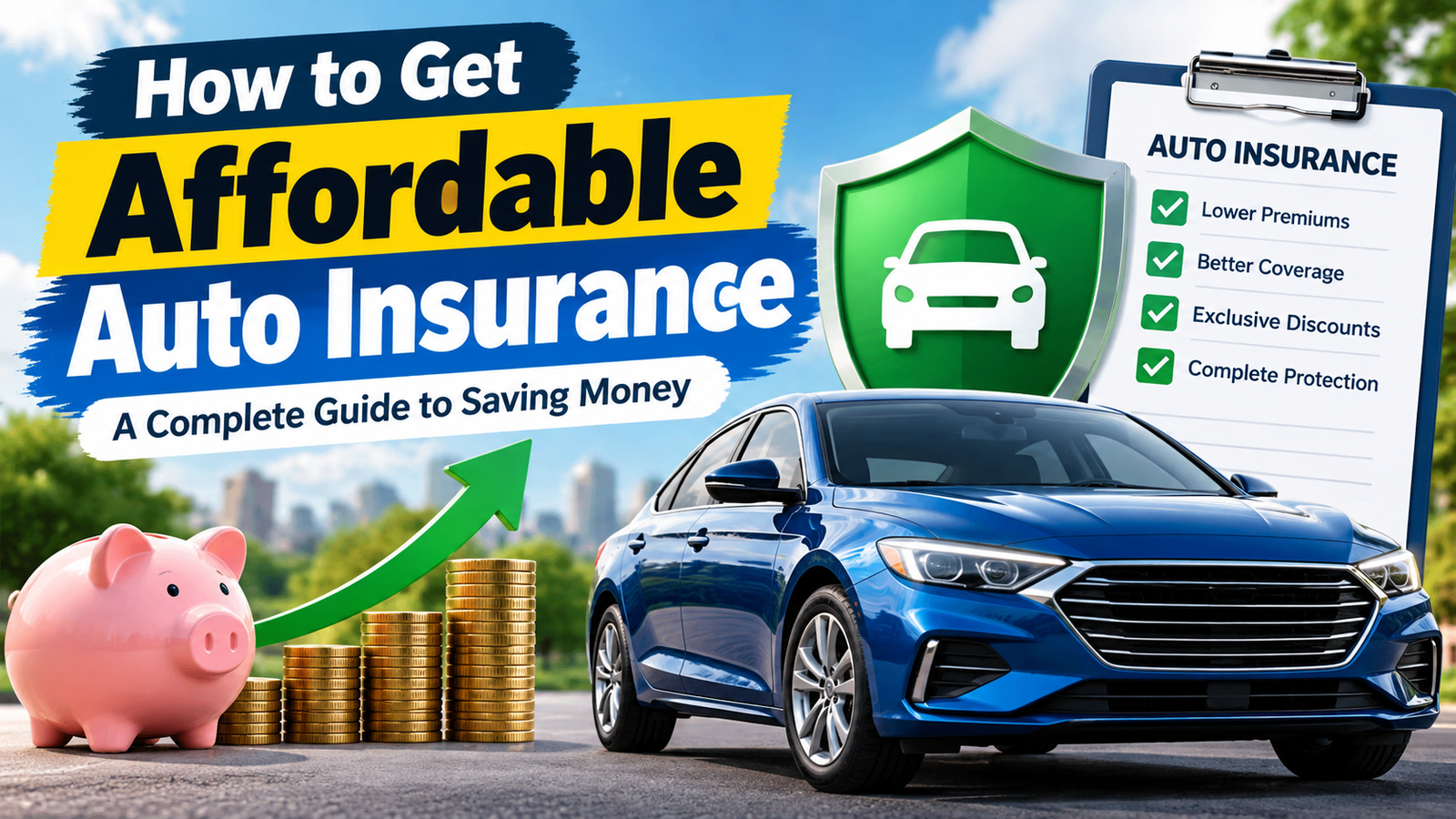
How to Get Affordable Auto Insurance
Auto insurance is an essential expense for drivers, providing financial protection against accidents, vehicle damage, theft, and certain liability claims. However, finding a policy that offers reliable coverage at an affordable price can be challenging. Insurance premiums vary depending on factors such as driving history, vehicle type, location, age, and coverage limits.
The good news is that drivers can take several practical steps to reduce their auto insurance costs without sacrificing important protection. By comparing quotes, understanding coverage options, maintaining a clean driving record, and taking advantage of available discounts, you can find a policy that fits your needs and budget.
This guide explains how to get affordable auto insurance and make informed decisions when choosing a policy.
1. Compare Quotes From Multiple Insurance Companies
One of the most effective ways to find affordable auto insurance is to compare quotes from several insurance providers. Different companies use different methods to calculate premiums, which means the cost of similar coverage can vary significantly.
When comparing quotes, make sure each policy includes similar coverage limits, deductibles, and optional benefits. A lower premium may initially look attractive, but it could provide less protection or require higher out-of-pocket expenses after an accident.
You can request quotes directly from insurance companies, use reputable comparison websites, or work with a licensed insurance agent.
Tip: Compare at least three quotes before making a final decision. Evaluate the coverage, customer service reputation, claims process, and policy exclusions rather than focusing exclusively on price.
2. Choose the Right Type of Coverage
Selecting appropriate coverage is essential for balancing affordability and financial protection. Auto insurance policies may include several types of coverage, depending on your location and the insurer.
Liability Coverage
Liability coverage generally helps pay for injuries or property damage you cause to others in an accident for which you are legally responsible. It does not typically cover damage to your own vehicle.
Collision Coverage
Collision coverage helps pay for damage to your vehicle resulting from a collision with another vehicle or object, subject to your policy terms and deductible.
Comprehensive Coverage
Comprehensive coverage generally protects against certain non-collision events, such as theft, vandalism, hail, fire, and falling objects.
Personal Injury Protection or Medical Payments Coverage
Depending on your location and policy, these coverages may help pay for medical expenses resulting from an accident.
Before purchasing a policy, review which coverages are required by law and which are optional. Choose protection based on your financial situation, vehicle value, and potential risks.
3. Maintain a Clean Driving Record
Your driving history can significantly influence your insurance premium. Drivers with a history of accidents, traffic violations, or certain serious offenses may pay more than drivers with clean records.
To maintain a favorable driving history:
- Follow posted speed limits and traffic regulations.
- Avoid distracted driving, including texting while driving.
- Never drive under the influence of alcohol or drugs.
- Maintain a safe following distance.
- Complete an approved defensive driving course if your insurer offers a discount for doing so.
Safe driving habits can reduce accident risks and may help you qualify for lower premiums over time. However, the impact depends on the insurance provider and applicable regulations.
4. Ask About Available Insurance Discounts
Many insurance companies offer discounts that can make coverage more affordable. However, eligibility requirements vary by provider, location, and policy.
Common discounts may include:
- Multi-policy discount: Combining auto insurance with homeowners, renters, or another eligible policy.
- Multi-vehicle discount: Insuring more than one eligible vehicle with the same company.
- Safe-driver discount: Maintaining a qualifying driving record.
- Low-mileage discount: Driving fewer miles than the insurer’s qualifying threshold.
- Defensive driving discount: Completing an approved safety course.
- Payment discount: Paying the premium in full or choosing an eligible payment method.
- Vehicle safety discount: Having qualifying anti-theft devices or safety features.
Contact your insurance provider and ask which discounts are available. Some discounts are not applied automatically, so reviewing your eligibility can help you avoid missing potential savings.
5. Consider Increasing Your Deductible
A deductible is the amount you generally pay out of pocket toward a covered claim before your insurer pays the remaining eligible amount.
For example, choosing a $1,000 deductible instead of a $500 deductible may reduce your premium. However, the exact savings depend on your insurer and policy.
A higher deductible can be a reasonable option if you have enough savings to cover it after an accident. It may be unsuitable if paying that amount unexpectedly would create financial difficulties.
Before changing your deductible, compare the premium savings with the additional amount you would have to pay when filing a claim.
Important: Deductibles typically apply to specific coverages, such as collision and comprehensive, rather than every type of claim.
6. Choose a Vehicle With Affordable Insurance Costs
The vehicle you drive can affect your insurance premium. Insurers may consider the vehicle’s value, repair costs, theft risk, safety features, engine specifications, and historical claim patterns.
Luxury vehicles, high-performance cars, and models with expensive replacement parts may cost more to insure than some standard vehicles.
If you are planning to purchase a car, obtain insurance estimates for several models before making your decision. A vehicle with strong safety features, reasonable repair costs, and a lower theft risk may offer better overall ownership costs.
Remember that the cheapest vehicle to purchase is not always the cheapest to insure. Comparing both expenses can help you make a more informed choice.
7. Review Your Coverage Regularly
Your insurance needs may change over time. A policy that was appropriate several years ago may no longer provide the best balance of cost and protection.
Review your policy whenever you experience a significant change, such as purchasing a different vehicle, moving to a new location, changing your annual mileage, or adding another driver.
You may also want to review optional coverages on an older vehicle. For example, if the vehicle’s market value has declined substantially, collision or comprehensive coverage may be less cost-effective in some circumstances.
Before removing coverage, compare the annual premium with the vehicle’s current value, potential repair costs, deductible, and your ability to replace the vehicle if it is damaged or stolen.
Never reduce coverage below legal requirements or a level needed to protect your financial well-being.
8. Improve Your Credit Profile Where Permitted
In some jurisdictions, insurance companies are permitted to use credit-based insurance scores when calculating premiums. In other places, this practice is restricted or prohibited.
Where credit-based insurance scoring is permitted, improving your credit profile may help over time. Paying bills on time, checking credit reports for errors, and managing outstanding debt responsibly are useful financial habits.
However, a credit score does not determine premiums everywhere. Ask your insurer which factors affect your rate in your location before focusing on this strategy.
9. Consider Usage-Based Insurance
Usage-based insurance programs use driving data to assess certain driving behaviors or mileage. Depending on the program, an insurer may evaluate braking patterns, driving time, acceleration, total distance traveled, or other information.
Drivers who travel fewer miles or demonstrate qualifying safe-driving habits may receive discounts.
Before enrolling, understand how the program works, what data it collects, how that information is used, and whether unsafe driving patterns could increase your premium at renewal.
Usage-based insurance is not available or beneficial for every driver, so compare the program’s terms with a traditional policy.
10. Avoid Unnecessary Coverage and Add-Ons
Optional benefits can be useful, but purchasing every available add-on may increase your insurance costs unnecessarily.
Depending on the policy, optional features may include roadside assistance, rental car reimbursement, gap insurance, or enhanced replacement coverage.
Review each benefit carefully and consider whether you genuinely need it. For example, you may already have roadside assistance through a vehicle manufacturer, automobile club, or another service.
Avoid removing valuable protection simply to obtain a lower quote. The goal is to eliminate unnecessary expenses while retaining coverage that protects you against meaningful financial risks.
11. Pay Attention to Policy Renewals
Insurance premiums can change at renewal because of claims history, vehicle changes, updated pricing models, regional risk factors, and other considerations.
Do not assume your current insurer will always offer the lowest rate. Before renewing, compare your existing policy with alternatives that provide similar protection.
Review your renewal notice for changes in premiums, deductibles, coverage limits, exclusions, and fees. If your rate has increased, contact your insurer to ask why and whether any discounts or policy adjustments are available.
Start comparing options before your current policy expires to avoid a lapse in coverage.
12. Understand the Total Cost of Insurance
The lowest advertised premium does not always represent the best financial choice. An affordable policy should offer an appropriate level of protection, clear terms, and a reliable claims process.
When evaluating policies, consider:
- Monthly or annual premiums.
- Deductibles and other out-of-pocket costs.
- Coverage limits and exclusions.
- Customer service and claims handling.
- The insurer’s financial strength and reputation.
- Cancellation fees and payment charges, where applicable.
A policy with a slightly higher premium may provide better value if it offers stronger coverage or more suitable benefits.
Common Mistakes to Avoid When Shopping for Auto Insurance
Drivers sometimes make decisions that appear to save money initially but may increase financial risk later.
Providing inaccurate information: Incorrect details about your vehicle, driving history, address, or mileage may affect pricing and could create problems with a claim.
Ignoring exclusions: Always understand what your policy does not cover.
Letting coverage lapse: A lapse can expose you to financial and legal risks and may increase future insurance costs.
Selecting an unaffordable deductible: A high deductible can reduce premiums but may be difficult to pay after an accident.
Avoiding these mistakes can help you make a more confident insurance decision.
A Simple Checklist for Finding Affordable Auto Insurance
Before purchasing or renewing a policy, use this checklist:
- Compare quotes from at least three insurers.
- Check the minimum coverage required in your jurisdiction.
- Choose suitable liability limits and optional coverage.
- Ask about every discount for which you may qualify.
- Compare deductibles and out-of-pocket costs.
- Review the insurer’s claims process and reputation.
- Verify the policy’s exclusions and payment terms.
- Reassess your coverage at renewal.
- Confirm the policy is active before relying on it.
Following these steps can make the process more organized and help you identify a policy that fits your budget.
Frequently Asked Questions
What is the cheapest way to get auto insurance?
The most effective approach is usually to compare multiple quotes, ask about discounts, maintain a safe driving record, and select appropriate coverage and deductibles. The best strategy depends on your circumstances and location.
Can I get affordable auto insurance with a poor driving record?
Yes, affordable options may still be available, although premiums can be higher. Compare providers that insure drivers with similar histories, avoid further violations, and ask about available programs or discounts.
Does a higher deductible lower auto insurance premiums?
A higher deductible can reduce premiums for certain coverages. However, you must be prepared to pay the deductible if you file a covered claim.
Is minimum auto insurance coverage enough?
Minimum coverage may satisfy local legal requirements, but it may not fully protect you against substantial accident-related expenses. Consider your assets, financial obligations, vehicle value, and potential liability when selecting coverage.
How often should I compare auto insurance quotes?
Review your policy at least once a year before renewal. It is also worth comparing quotes after major changes, such as buying a vehicle, moving, or changing your driving habits.
Can I negotiate my auto insurance premium?
You can ask your insurer to review your rate, check for missing discounts, and explain available coverage adjustments. While the premium may not be directly negotiable, changing your policy or comparing competitors may help you find a better price.
Conclusion
Getting affordable auto insurance does not mean sacrificing essential financial protection. By comparing quotes, understanding coverage options, maintaining a clean driving record, checking for discounts, and reviewing your policy regularly, you can make informed decisions that help control insurance expenses.
The most suitable policy is one that balances cost, coverage, service, and financial security. Take time to compare your options, read the policy terms carefully, and choose protection that reflects your individual needs.
With a thoughtful approach, you can find auto insurance that fits your budget while helping protect you from the financial consequences of unexpected events on the road.
Disclaimer: Insurance requirements, coverage options, discount eligibility, and pricing practices vary by country, state, and insurer. Consult local regulations and your insurance provider for information specific to your circumstances.