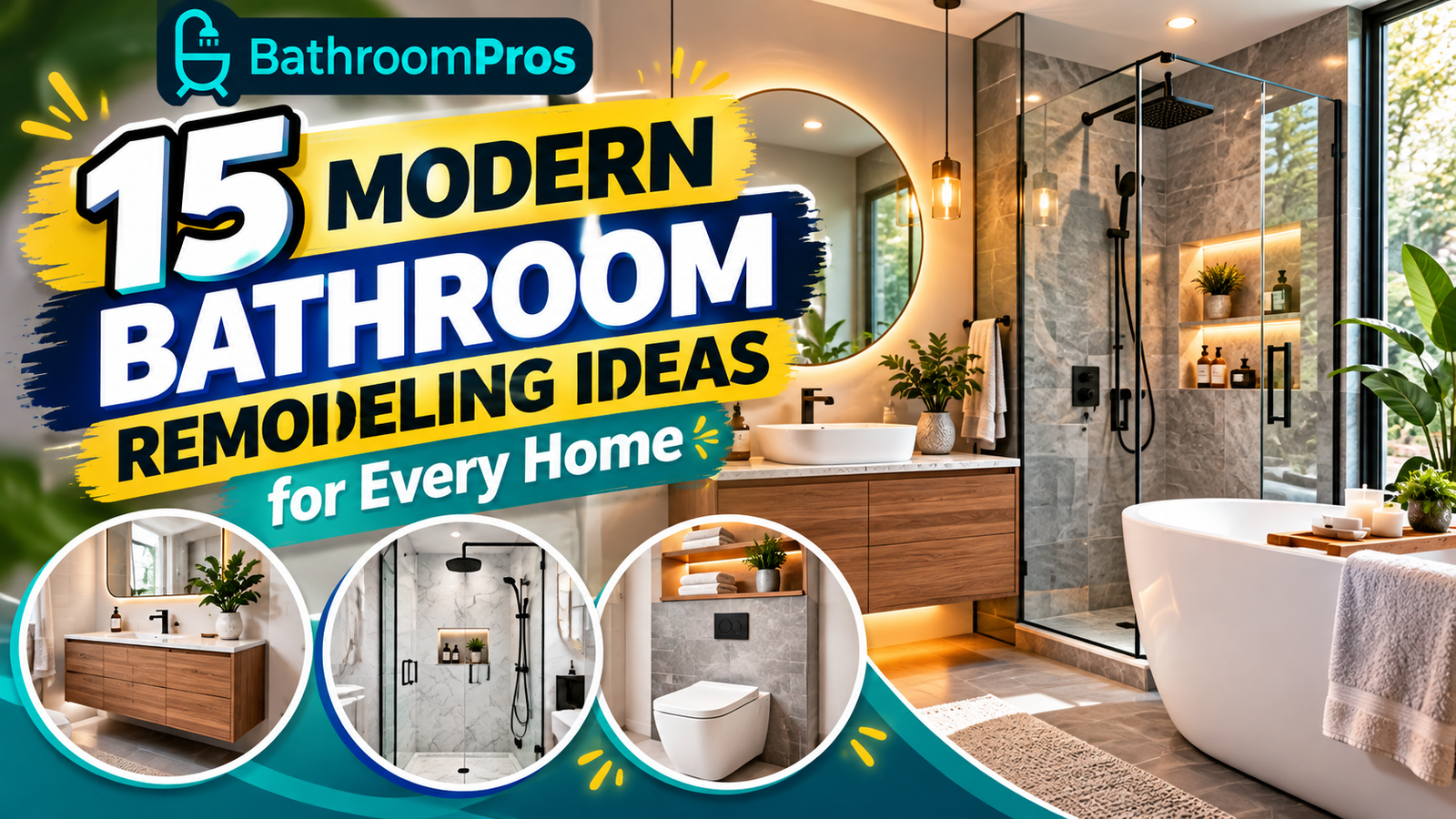
15 Modern Bathroom Remodeling Ideas for Every Home
A bathroom is more than just a functional space. It is an important part of your home where comfort, cleanliness, and relaxation come together. Whether you have a small bathroom that needs better organization or a spacious bathroom that deserves a modern makeover, the right remodeling ideas can significantly improve its appearance and functionality.
Modern bathroom remodeling focuses on clean designs, practical storage, efficient fixtures, attractive materials, and comfortable features. You do not always need a complete renovation to create a beautiful bathroom. Sometimes, updating the lighting, replacing outdated fixtures, or introducing new colors can make a noticeable difference.
However, successful remodeling requires careful planning. Choosing suitable materials, establishing a realistic budget, and understanding your household’s needs can help you achieve a result that looks attractive and performs well over time.
In this guide, we explore 15 modern bathroom remodeling ideas for every home, along with practical tips to help you create a stylish, comfortable, and functional space.
1. Create a Minimalist Bathroom Design
Minimalist bathroom design is one of the most popular approaches to modern interiors. It emphasizes simplicity, clean lines, uncluttered surfaces, and a carefully selected color palette.
Instead of filling the bathroom with unnecessary decorations, focus on essential elements that serve a clear purpose. A floating vanity, frameless mirror, streamlined faucet, and simple wall tiles can create a sophisticated appearance.
Neutral shades such as white, beige, gray, and soft taupe work particularly well in minimalist bathrooms. These colors create a calm atmosphere and can make smaller spaces feel more open.
To maintain this style, keep countertops organized and choose storage solutions that hide everyday toiletries.
Remodeling tip: Invest in a few high-quality fixtures rather than purchasing numerous decorative accessories. A simple, coordinated design often looks more refined and is easier to maintain.
2. Install a Walk-In Shower
A walk-in shower can give your bathroom a contemporary appearance while improving accessibility and making the space feel more open.
Many modern designs feature clear glass panels, elegant wall tiles, recessed shelving, and sleek shower fixtures. A frameless glass enclosure allows natural and artificial light to travel through the room, helping create a spacious visual effect.
For a more luxurious appearance, consider a rainfall showerhead or a handheld shower attachment. Combining both options can improve convenience for different users.
Proper waterproofing and drainage are essential when installing a walk-in shower. A correctly sloped floor helps direct water toward the drain, while professionally installed waterproofing protects surrounding structures from moisture damage.
If you are remodeling a small bathroom, a compact walk-in shower may also free up valuable floor space.
Remodeling tip: Choose slip-resistant flooring and make sure the shower layout provides adequate splash protection. A visually attractive shower should also be safe and practical.
3. Choose a Floating Bathroom Vanity
A floating vanity is mounted to the wall rather than resting directly on the floor. This design creates a clean, modern appearance and leaves visible floor space underneath the cabinet.
Because more of the floor remains visible, the bathroom may appear larger and less crowded. The open area can also make routine floor cleaning easier.
Floating vanities are available in a wide range of materials, including natural wood, engineered wood, laminate, and moisture-resistant cabinetry. A wood finish can introduce warmth, while a white or matte-black vanity creates a more contemporary look.
When selecting a floating vanity, consider the available wall space, sink dimensions, plumbing arrangement, and storage requirements.
Wall-mounted vanities must be securely attached to suitable structural support. Professional installation may be necessary, particularly when the wall needs reinforcement or plumbing modifications.
Remodeling tip: Choose a vanity with drawers and built-in organizers to keep toiletries, cleaning products, and personal items neatly stored.
4. Use Large-Format Tiles for a Seamless Look
Large-format tiles are an excellent option for homeowners who want a clean and sophisticated bathroom design.
Compared with smaller tiles, larger tiles generally require fewer grout lines. This creates a more continuous visual appearance and may simplify routine cleaning.
Large tiles work well on bathroom floors, shower walls, and selected feature walls. Popular choices include marble-look porcelain, concrete-inspired finishes, and neutral stone patterns.
Light-colored tiles can make a compact bathroom feel brighter, while darker finishes can introduce contrast and depth.
However, large-format tiles require a properly prepared surface and careful installation. Uneven floors or walls can affect the finished appearance, and appropriate slip resistance should be considered for bathroom flooring.
Remodeling tip: Use a consistent tile design across adjoining areas to create visual continuity. For the shower floor, choose tiles that are suitable for the slope and provide appropriate traction.
5. Upgrade Your Bathroom Lighting
Lighting can dramatically change the appearance and usability of a bathroom. A well-designed lighting plan combines general illumination with task lighting and, where appropriate, accent lighting.
Start with adequate overhead lighting to illuminate the entire room. Add lighting around the vanity mirror to improve visibility during shaving, makeup application, and other daily routines.
Wall sconces positioned appropriately beside a mirror can reduce harsh shadows. Alternatively, a backlit mirror can create a sleek, contemporary appearance.
Accent lighting can highlight architectural details, decorative niches, or textured walls. Dimmable lighting may also help create a relaxing atmosphere for evening routines.
Because bathrooms contain moisture, choose fixtures rated for their intended location and follow local electrical safety requirements. Any electrical work in wet areas should be completed by a qualified professional.
Remodeling tip: Select lighting with a consistent color temperature so the room feels coordinated. Neutral white lighting is often useful around mirrors, while warmer lighting can make the overall space feel more inviting.
6. Add a Freestanding Bathtub
A freestanding bathtub can become the focal point of a spacious bathroom. Its sculptural shape creates an elegant appearance and can give the room a spa-inspired atmosphere.
Modern freestanding tubs are available in oval, rectangular, rounded, and asymmetrical designs. You can choose a model that complements the room’s architecture and overall decorating style.
Before purchasing a bathtub, evaluate the available floor area, plumbing connections, doorway clearance, and structural capacity. A filled bathtub can be extremely heavy, particularly when it is made from dense materials.
Consider how the tub will be cleaned and whether there is enough room to access the surrounding floor.
In a smaller bathroom, a freestanding tub may occupy too much space. A compact built-in bathtub or a walk-in shower could be a more practical choice.
Remodeling tip: Pair a freestanding tub with a simple wall finish and coordinated fixtures to keep the design elegant rather than overcrowded.
7. Introduce Natural Materials and Warm Textures
Modern bathroom design does not have to feel cold or overly clinical. Natural materials and warm textures can make the room feel comfortable while maintaining a contemporary appearance.
Wood-look cabinetry, stone-inspired tiles, textured ceramics, and natural-colored accessories are popular choices. These materials introduce visual interest without requiring bold patterns or bright colors.
For example, a light oak vanity can complement white walls and beige floor tiles. Stone-look porcelain can add texture while offering a practical surface for a moisture-prone environment.
Actual wood and natural stone may require additional maintenance, depending on their finish and exposure to water. Select suitable products and follow the manufacturer’s sealing and care instructions.
You can also introduce natural textures through towels, woven baskets, and decorative objects placed away from direct water exposure.
Remodeling tip: Limit the number of competing finishes. Two or three coordinated materials are often enough to create a balanced and sophisticated bathroom.
8. Maximize Storage With Built-In Shelving
Effective storage is essential for maintaining an organized bathroom. Without enough storage, countertops can quickly become cluttered with toiletries, cosmetics, towels, and cleaning products.
Built-in shelving provides a practical solution without adding bulky furniture. Recessed shower niches can hold shampoo and soap, while wall niches near the vanity can display small decorative items.
Tall cabinets, mirrored storage units, and vanity drawers can also help make better use of available space.
In compact bathrooms, vertical storage is particularly valuable because it uses wall space rather than occupying additional floor area.
When planning built-in shelves, consider what you intend to store and how frequently you need to access those items. Shelving should be positioned at convenient heights and installed using materials appropriate for the bathroom environment.
Remodeling tip: Combine open shelving with closed cabinets. Open shelves offer easy access to everyday essentials, while closed storage keeps less attractive items out of sight.
9. Choose a Modern Bathroom Color Palette
Color plays an important role in establishing the atmosphere of a remodeled bathroom. Modern designs often use neutral colors, earthy shades, and carefully selected accents.
White remains a popular option because it reflects light and creates a clean appearance. Gray can introduce a contemporary feel, while beige and warm taupe add softness.
For homeowners who prefer more personality, muted green, navy blue, charcoal, or dusty blue can provide attractive accents.
You do not need to use the same color throughout the entire bathroom. A feature wall, vanity cabinet, or carefully chosen tile can introduce contrast without overwhelming the space.
When choosing colors, consider the bathroom’s natural light, artificial lighting, tile finishes, and existing fixtures.
Remodeling tip: Test paint samples and material swatches under the lighting conditions in your bathroom before making a final decision. Colors can appear different in natural and artificial light.
10. Install a Frameless Bathroom Mirror
A frameless mirror is a simple way to create a modern and uncluttered bathroom design.
Without a prominent frame, the mirror blends naturally with the surrounding wall. It can also reflect light and make a small bathroom feel more spacious.
Consider a large rectangular mirror above the vanity for a clean architectural look. Rounded or oval mirrors can soften a bathroom dominated by straight lines.
For additional convenience, you might choose a mirror with integrated lighting, anti-fog functionality, or adjustable brightness, depending on your budget.
The mirror should be proportionate to the vanity and positioned at a comfortable height for the people who use the bathroom.
Secure installation is important, especially for large or heavy mirrors. Select appropriate mounting hardware and follow the manufacturer’s installation instructions.
Remodeling tip: Coordinate the mirror with your vanity, faucets, and lighting fixtures. Matching finishes can make the entire design feel intentional and cohesive.
11. Upgrade to Water-Efficient Fixtures
Bathroom remodeling provides an excellent opportunity to improve water efficiency and reduce utility expenses.
Modern low-flow showerheads, efficient faucets, and water-saving toilets can help reduce water consumption while maintaining everyday functionality.
When choosing fixtures, review their flow rates, performance ratings, and compatibility with your plumbing system. Water efficiency labels and product specifications can help you compare available options.
A dual-flush toilet, for example, offers different flush volumes for liquid and solid waste. Efficient showerheads can reduce water usage without necessarily sacrificing a comfortable shower experience.
It is also worth checking for leaks around faucets, toilets, and shower connections. Even a small, persistent leak can waste water over time.
Remodeling tip: Prioritize fixtures that combine reliable performance with measurable water savings. Consider local water costs and availability when estimating the long-term financial benefits.
12. Create a Spa-Inspired Bathroom
A spa-inspired bathroom focuses on comfort, relaxation, and a calm visual environment.
You can create this atmosphere without completely redesigning the room. Soft lighting, warm neutral colors, organized surfaces, and comfortable towels can make an immediate difference.
If your budget allows, consider a rainfall showerhead, heated towel rail, underfloor heating, or a soaking bathtub. Each feature adds a different level of comfort, although installation costs and energy use should be considered.
Natural textures, subtle fragrances, and a few carefully selected accessories can further enhance the experience.
However, avoid overcrowding the bathroom with decorative objects. A relaxing environment generally benefits from clean surfaces and practical organization.
Ventilation is also important in a spa-inspired bathroom. A properly sized exhaust fan helps control humidity and reduces the risk of mold and moisture damage.
Remodeling tip: Start with lighting, storage, and comfortable finishes before investing in expensive luxury features. Small improvements can create a relaxing atmosphere at a more manageable cost.
13. Improve Ventilation and Moisture Control
Ventilation may not be the most visually exciting part of a bathroom remodel, but it is one of the most important.
Bathrooms produce moisture from showers, baths, and everyday use. Without adequate ventilation, humidity can contribute to condensation, peeling paint, damaged finishes, and mold growth.
A suitable exhaust fan helps remove humid air. Its capacity should be appropriate for the room’s size and layout, and it should be installed according to applicable building and electrical requirements.
Make sure the fan’s exhaust is directed outdoors where required, rather than into an enclosed attic or wall cavity.
You should also inspect existing ventilation, plumbing connections, and waterproofing before covering walls or installing new finishes.
Waterproof membranes, correctly sealed shower areas, and moisture-resistant materials can help protect the bathroom from long-term damage.
Remodeling tip: Address hidden moisture problems before installing new tiles, cabinetry, or paint. Cosmetic improvements will not last if the underlying source of water damage remains unresolved.
14. Add Stylish Hardware and Modern Fixtures
Replacing outdated hardware is one of the simplest ways to refresh a bathroom.
Modern faucets, shower controls, cabinet handles, towel bars, and toilet accessories are available in a wide variety of styles and finishes.
Brushed nickel offers a versatile appearance, matte black creates strong contrast, and polished chrome provides a bright, classic finish. Brushed brass can introduce warmth when used with suitable colors and materials.
For a coordinated appearance, choose finishes that complement one another. However, using different finishes can also work when the contrast is intentional and balanced.
Pay attention to compatibility when replacing faucets or shower fixtures. Existing plumbing connections, mounting holes, and valve arrangements may limit your options or require additional work.
Remodeling tip: If a complete renovation is outside your budget, replacing the faucet, cabinet handles, mirror, and towel accessories can provide a noticeable visual upgrade without changing the entire room.
15. Design a Small Bathroom for Maximum Space
Small bathrooms require thoughtful planning because every inch matters. The goal is to improve movement, storage, and functionality while keeping the room visually open.
Wall-mounted vanities, compact sinks, sliding shower doors, and recessed storage can help reduce clutter. Large mirrors and well-positioned lighting can make the room appear brighter and more spacious.
Using similar colors across the walls and floor can create visual continuity. Glass shower panels can also preserve sightlines, making the room feel less divided.
Avoid choosing oversized fixtures that leave insufficient space for comfortable movement. Before purchasing new items, measure the bathroom carefully and create a layout showing the position of doors, plumbing, storage, and fixtures.
If you plan to change the location of a toilet, shower, or bathtub, account for the additional plumbing work and associated costs.
Remodeling tip: Prioritize function before decoration. A carefully planned compact bathroom can be more comfortable and attractive than a larger bathroom with a poorly arranged layout.
How to Plan a Successful Bathroom Remodel
Choosing attractive design ideas is only one part of the remodeling process. Careful preparation helps prevent unexpected expenses and delays.
Establish a Realistic Budget
Determine how much you can comfortably spend before beginning the project. Include materials, labor, plumbing, electrical work, waterproofing, permits where required, and disposal of old fixtures.
Set aside a contingency fund for unexpected issues, especially if the existing bathroom is old or has signs of water damage.
Obtain multiple quotes from qualified contractors and compare the scope of work rather than looking only at the total price.
Measure the Available Space
Accurate measurements help you select appropriately sized fixtures and avoid layout problems. Record the dimensions of the room, the position of plumbing connections, door swings, windows, and existing ventilation.
A basic floor plan can help you understand which improvements are practical.
Select Durable Materials
Bathrooms are exposed to moisture, temperature changes, and frequent cleaning. Choose materials that are suitable for wet environments and easy to maintain.
Check the manufacturer’s guidance for tile slip resistance, grout, sealants, cabinetry, countertops, and waterproofing products.
Hire Qualified Professionals
Complex remodeling tasks may require licensed or otherwise qualified plumbers, electricians, waterproofing specialists, and contractors, depending on local regulations.
Professional installation can be particularly important when changing plumbing layouts, modifying electrical circuits, installing underfloor heating, or rebuilding a shower.
Plan the Work Sequence
A typical bathroom remodel may involve demolition, plumbing and electrical changes, repairs to walls or floors, waterproofing, tile installation, fixture installation, and final finishing.
The exact sequence depends on the project’s scope. Waterproofing and other concealed work should be completed and inspected as appropriate before being covered by finished surfaces.
Common Bathroom Remodeling Mistakes to Avoid
Even an attractive design can create problems if important practical details are overlooked.
Here are some common mistakes to avoid:
- Ignoring ventilation: Poor airflow can contribute to moisture damage and mold.
- Underestimating the budget: Unexpected repairs and installation expenses can increase project costs.
- Choosing materials based only on appearance: Flooring, cabinetry, and finishes must be suitable for bathroom conditions.
- Overlooking storage: Insufficient storage can make the room feel cluttered after remodeling.
- Ignoring lighting placement: Poorly positioned lights can create shadows around the vanity.
- Skipping waterproofing: Inadequate waterproofing can lead to expensive hidden damage.
- Selecting oversized fixtures: Large fixtures can restrict movement in smaller bathrooms.
- Changing plumbing without planning: Relocating fixtures can increase labor and material costs.
Avoiding these mistakes helps protect your investment and makes the finished bathroom more practical for everyday use.
Frequently Asked Questions About Bathroom Remodeling
How much does a modern bathroom remodel cost?
The cost depends on the bathroom’s size, location, materials, labor rates, and the extent of the renovation. Cosmetic updates are generally less expensive than projects involving plumbing relocation, structural changes, or luxury fixtures. Obtain local estimates to develop an accurate budget.
How long does a bathroom remodel take?
The timeline varies according to project complexity, contractor availability, material delivery, and unexpected repairs. A simple cosmetic update may take considerably less time than a full renovation involving new plumbing, electrical work, waterproofing, and tile installation.
What is the best style for a modern bathroom?
Minimalist, contemporary, Scandinavian-inspired, and spa-inspired designs are popular options. The best style depends on your preferences, the size of your bathroom, your budget, and the architectural character of your home.
How can I remodel a bathroom on a budget?
Keep the existing layout when practical, refresh paint and hardware, replace outdated lighting, and focus on high-impact improvements. Compare material prices and prioritize repairs or upgrades that improve safety, durability, and daily functionality.
What adds the most value to a bathroom remodel?
The results depend on your local property market. A clean, functional bathroom with durable finishes, good lighting, effective ventilation, and reliable plumbing can improve a home’s appeal. Expensive luxury features do not necessarily provide the best financial return.
Should I choose a bathtub or a walk-in shower?
Consider the available space, household needs, accessibility, and personal preferences. A walk-in shower may suit a compact bathroom or a homeowner who prioritizes convenience. A bathtub can be valuable for households that prefer soaking or need bathing facilities for children.
What are the best colors for a modern bathroom?
White, beige, gray, taupe, and soft earthy shades are versatile choices. Muted green, navy, and charcoal can also work well as accent colors. Consider the room’s natural light and the colors of the tiles, vanity, and fixtures before making a final decision.
Conclusion
A successful bathroom remodel combines attractive design with comfort, functionality, and long-term durability. Whether you prefer minimalist interiors, a luxurious walk-in shower, a floating vanity, or a relaxing spa-inspired atmosphere, there are many ways to transform your bathroom to suit your lifestyle.
The 15 ideas in this guide offer practical inspiration for bathrooms of different sizes and budgets. Start by identifying the improvements that matter most, establish a realistic budget, and choose materials and fixtures that can withstand daily use.
Remember that good planning is just as important as good design. Pay attention to ventilation, waterproofing, lighting, storage, and professional installation where necessary.
With thoughtful decisions and a clear remodeling plan, you can create a modern bathroom that looks beautiful, functions efficiently, and remains comfortable for years to come.
Disclaimer: Remodeling costs, permit requirements, and installation standards vary by location. Consult qualified local professionals and follow applicable building, plumbing, electrical, and waterproofing requirements before beginning major work.