What Does Home Insurance Really Cover?
Home insurance is designed to help protect homeowners from certain unexpected financial losses involving their property, belongings, and liability. However, it is important to understand that not every home insurance policy automatically includes every type of protection.
Coverage varies depending on the insurer, policy, location, coverage limits, exclusions, deductibles, and optional endorsements. Understanding what your policy actually covers can help you make informed decisions and avoid unexpected financial surprises.
What Is Home Insurance?
Home insurance is a type of insurance that may provide financial protection against certain covered risks affecting your home and personal property. Depending on the policy, coverage may apply to events such as fire, certain storm damage, theft, vandalism, and other covered losses.
A policy may also offer liability protection if someone is injured on your property or if you are responsible for certain covered damage to another person’s property.
Because policies differ, homeowners should review their specific policy documents to understand which protections are included and which may require additional coverage.
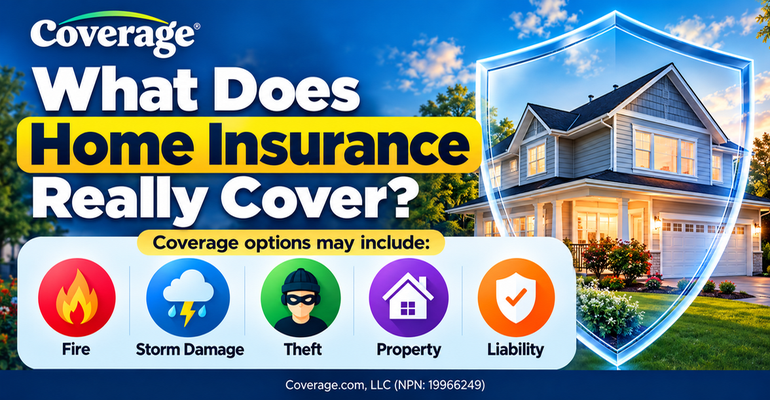
Coverage Options May Include:
Fire | Storm Damage | Theft | Property | Liability
These are common areas of home insurance protection, but the availability and extent of coverage depend on the specific policy.
What Can Home Insurance Cover?
1. Fire Damage
Depending on the policy, home insurance may cover certain damage caused by fire.
Dwelling coverage may help pay for eligible repairs or rebuilding when a covered fire damages the structure of your home. This may include parts of the property such as:
- Walls
- Roof
- Floors
- Ceilings
- Doors and windows
- Permanently installed fixtures
Coverage is subject to the policy’s terms, limits, exclusions, and deductible.
2. Storm Damage
Some home insurance policies may cover certain types of storm-related damage. Depending on the policy and location, this could include damage caused by events such as wind or hail.
However, storm coverage can vary significantly. Certain weather-related risks may be excluded or subject to special deductibles or coverage limitations.
Homeowners should review their policy to determine which types of storm damage are covered.
3. Theft
Personal property coverage may help protect eligible belongings if they are stolen in a covered situation.
Items that may qualify can include:
- Furniture
- Clothing
- Electronics
- Appliances
- Household goods
- Certain personal valuables
High-value belongings such as jewelry, collectibles, artwork, or expensive electronics may have specific limits. Additional coverage may be available for certain items depending on the insurer and policy.
4. Property Protection
Depending on the policy, property coverage may apply to damage involving the home’s structure and eligible personal belongings.
Dwelling coverage may help with covered damage to the physical structure of the home, while personal property coverage may help with eligible belongings inside the property.
Some policies may also provide coverage for qualifying detached structures, such as garages, sheds, or other outbuildings.
The exact protections and limits depend on the policy.
5. Liability Protection
Some home insurance policies include personal liability coverage. This protection may help if you are legally responsible for certain covered injuries to another person or covered damage to someone else’s property.
For example, if a visitor is injured on your property and you are found legally responsible, liability coverage may help with eligible expenses or legal costs, subject to the policy terms and limits.
Liability coverage is not necessarily identical across all policies, so homeowners should review the amount of protection provided.
Additional Living Expenses
Some home insurance policies may provide coverage for additional living expenses if a covered loss makes the insured home temporarily uninhabitable.
Depending on the policy, this protection may help with certain additional costs, such as temporary accommodation and other necessary expenses that exceed your normal living costs.
Coverage limits, qualifying events, and eligible expenses vary by policy.
What Does Home Insurance Usually Not Cover?
Home insurance does not cover every possible cause of damage or loss. Common exclusions or limitations may include:
Flood Damage
Standard home insurance policies may not cover damage caused by flooding. Separate flood insurance or additional protection may be necessary, depending on your location and circumstances.
Earthquake Damage
Earthquake damage may be excluded from standard home insurance policies. Specialized earthquake coverage may be available separately in some areas.
Normal Wear and Tear
Insurance is generally designed for unexpected covered losses rather than routine deterioration.
For example, an aging roof that gradually deteriorates may not be covered simply because it eventually develops a leak.
Pest Damage
Damage caused by termites, rodents, and other pests may not be covered under a standard policy.
Poor Maintenance
Homeowners are generally responsible for routine property maintenance. Damage resulting from neglect or failure to address maintenance issues may not qualify for coverage.
Intentional Damage
Damage intentionally caused by an insured person is generally excluded from coverage.
These examples highlight why it is important to understand your policy’s exclusions rather than assuming every type of property damage is insured.
How Do Home Insurance Deductibles Work?
A deductible is the amount you may be responsible for paying toward a covered claim before insurance contributes, subject to the policy terms.
For example, if you have $10,000 in eligible covered damage and a $1,000 deductible, you may be responsible for the first $1,000, while the insurer may cover the remaining eligible amount up to the applicable policy limits.
A higher deductible may sometimes result in a lower premium, but it also means you may pay more out of pocket if you file a claim.
Replacement Cost vs. Actual Cash Value
Another important consideration is how an insurance policy values damaged or stolen property.
Replacement cost coverage generally considers the cost of replacing covered property with a comparable new item, subject to the policy’s terms and limits.
Actual cash value coverage generally takes depreciation into account when determining the value of covered property.
For example, if an older television is stolen, actual cash value coverage may account for depreciation, while replacement-cost coverage may provide a different amount toward replacing it.
Your policy may use different valuation methods for different types of property, so reviewing these provisions is important.
How Much Home Insurance Coverage Do You Need?
The appropriate amount of coverage depends on your home, belongings, risks, and financial circumstances.
When reviewing your coverage, consider:
- Estimated rebuilding costs
- Value of personal belongings
- High-value items
- Potential liability exposure
- Additional living expenses
- Detached structures
- Risks specific to your location
The market value of your home is not necessarily the same as the cost to rebuild it. Construction labor, materials, local building requirements, and other factors can affect rebuilding costs.
How to Make Sure You Have Appropriate Coverage
Create a Home Inventory
Make a list of your valuable belongings and, where possible, keep photographs, receipts, serial numbers, and other documentation.
A home inventory can make it easier to document your belongings if you need to make a claim.
Review Your Policy Regularly
Your insurance needs can change over time. Renovations, major purchases, new valuables, or changes to your property may affect the amount or type of coverage you need.
Understand Your Exclusions
Do not focus only on what your policy covers. Review exclusions, limitations, deductibles, and coverage conditions as well.
If you live in an area exposed to specific natural disasters, ask your insurer whether additional protection may be appropriate.
Compare Available Options
When shopping for home insurance, compare more than just the premium. Look at coverage limits, deductibles, exclusions, optional protections, and the claims process.
A lower premium does not necessarily mean better overall protection.
What Should You Do If You Need to File a Claim?
If your home experiences damage, prioritize everyone’s safety first. Once it is safe, document the damage with photographs or videos.
Contact your insurance provider promptly and follow its instructions. Keep receipts, repair estimates, temporary living expense records, and communications related to the claim.
Avoid making permanent repairs before the insurer has an opportunity to inspect the damage when an inspection is required. Reasonable steps to prevent further damage may still be necessary.
Final Thoughts
So, what does home insurance really cover? The answer depends on the specific policy. Coverage options may include protection for fire, storm damage, theft, property, liability, and potentially additional living expenses.
However, these protections are not automatically included in every policy, and coverage can be subject to limits, deductibles, exclusions, and other conditions.
Before purchasing or renewing home insurance, carefully review the policy and understand what is included, what is excluded, and whether additional coverage may be appropriate for your circumstances. Taking the time to understand your coverage can help you make more informed decisions and prepare financially for unexpected events.
Coverage.com, LLC (NPN: 19966249)